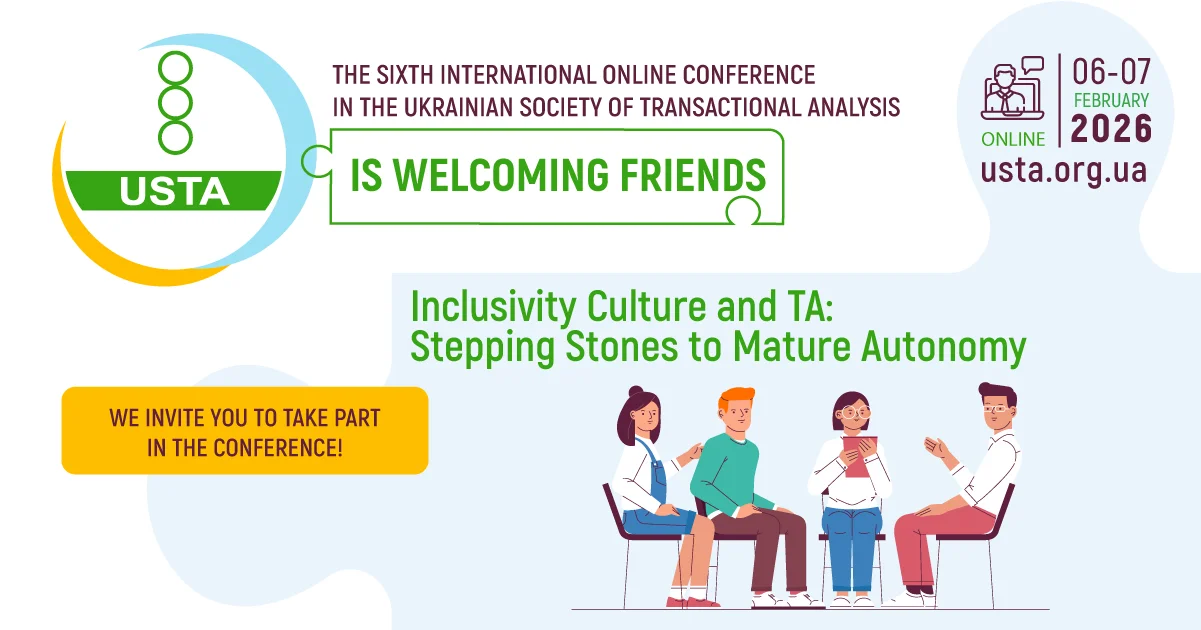
Six years of inspiration, knowledge and new discoveries is the milestone the USTA International Conference is celebrating in 2026!
Time really flies. It seems like only yesterday we opened the doors of the first conference space, got to know each other and shared our first impressions. And now is a new stage ahead, a new opportunity to get together and share new experiences.
Thanks to your support and participation, the USTA International Conference is becoming larger and more meaningful every year. Each meeting brings not only new knowledge, but also warm meetings, inspiration and development.
Modern society increasingly needs a culture of inclusivity, the practices and approaches that recognise the uniqueness of each person and create space for equal opportunities. In this context, transactional analysis becomes a powerful tool for understanding human interaction, developing maturity and responsibility.
We have become convinced that the strength of the Conference is rooted in its community. Every participant, every speaker, every partner contributes to the life and development of this shared experience.
Wholehearted thanks to our participants and speakers, due to your contribution and engagement the USTA Conference has become an annual tradition that we cherish and develop.
The Conference Organising Committee invites you to participate in the VI International Online Conference «USTA Is Welcoming Friends».
“CULTURE OF INCLUSIVITY AND TRANSACTIONAL ANALYSIS: STEPPING STONES TO MATURE AUTONOMY”
The purpose of the conference is to bring together transactional analysis specialists to discuss contemporary approaches to fostering a culture of inclusivity and the application of transactional analysis as an effective tool for developing mature autonomy in individuals, organisations and communities.
The underpinning basis of the conference theme: the theme of the conference reflects the idea of building ‘bridges’ between the humanistic values of inclusivity, as well as with the psychological tools of Transactional Analysis.
A culture of inclusiveness is the foundation for a society where the value of each individual is recognised and equal opportunities are ensured.
Transactional analysis provides methodological tools for researching interaction, overcoming barriers and developing partnerships, and offers psychological tools for developing a culture of inclusivity: it helps to foster acceptance, dialogue without discrimination and interaction based on respect for diversity.
Mature autonomy is the ultimate goal: it is a state when an individual, organisation, and community are capable of making responsible choices, engaging in constructive interaction, and realising their potential.
We will talk about:
Thus, the conference aims to find effective ways to combine the inclusive values of inclusivity, respect for diversity, and psychological practices for the development of individuals, organisations, and society.
Inclusivity in TA is a bridge between I and We, between personal autonomy and collective maturity.
The conference will feature interesting and useful master classes and workshops from international and Ukrainian speakers.
The Conference Organizing Committee invites you to participate in the VI International Online Conference “USTA is Welcoming Friends”.
We look forward to seeing you at the Conference and will be delighted to welcome you!
If you have any organisational questions regarding the Conference, please contact us: ustaconference@gmail.com
With warm regards and respect,
The Organising Committee of the USTA Conference
09:00
Registration of the participants
(connecting to the conference)
09:30 – 10:00
the conference opening
10:00 – 11:30
THE FIRST LINE OF THE WORKSHOPS
In this workshop, we will discuss the current direction of therapeutic work.
Historically, psychotherapies have been divided into two types.
The first type consists of approaches based on techniques: Redecision Therapy, CBT, EMDR, classical TA, hypnosis, etc.
The second type includes approaches based on relationships: Relational TA, psychoanalysis, client-centred therapy, Integrative TA, etc.
Traditionally, psychotherapy belonged to either one type or the other, while Relational Redecision consciously seeks to combine both approaches in a single methodology.
Relationship-based therapies are essentially forms of reparenting. That is, the client is invited into a therapeutic relationship which is tailored to their needs, friendly, compassionate, growth-promoting, and accepting and supportive.
When a person enters into such a relationship, most people naturally begin to grow psychologically. Receiving validation and acceptance in a lasting relationship, a person usually develops in a healthier direction.
Techniques such as redecision work differently. They use specific tools, including catharsis.
Redecision often involves powerful cathartic expression of emotions. The therapeutic value of such expression has long been recognised, starting with Freud and many other authors.
Through catharsis, many people naturally develop and grow.
Working with two chairs allows elements of exposure therapy to be applied to traumatic experiences, reducing their negative impact.
Resolution also uses the cognitive component of scenario analysis and games, as well as an understanding of how early trauma affects our relationships, thoughts, and feelings today.
This is commonly referred to as bibliotherapy, i.e., using the Adult client to support the process of embodying a new decision.
The use of catharsis, exposure to past trauma, and the client's acquisition of information about the script leads to significant insight.
Research by Vos and van Rijn (2025) in “The Handbook of Transactional Analysis Psychotherapy.An Evidence-based Approach” shows that such insights have a distinct positive therapeutic effect.
Moreover, they have been shown to be equivalent to the positive effect of a quality therapeutic relationship.
The Relational Redecision approach demonstrates how a culture of inclusivity is put into practice: therapeutic relationships create a safe, accepting space, and resolving techniques give the client the tools to change the script and regain autonomy. This way of working supports different aspects of a personal experience, emotions, thoughts, traumatic history, and need for closeness, thus serving as a ‘bridge’ from vulnerability and limiting scripts to a more mature, conscious, and autonomous life.
Tony White - TSTA-P-ITAA
Nataliia Isaieva - PTSTA-P-EATA
11:30 – 11:45
COMFORT BREAK
11:45 – 13:15
THE SECOND LINE OF THE WORKSHOPS
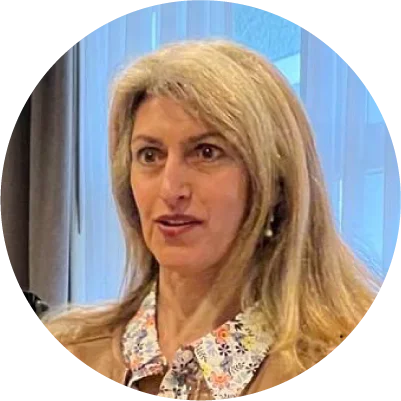
In this workshop, I will consdier a systemic approach to autonmy. This will include a review of democratic mind states and pluralism as pathways to maturity. The workshop will be interactive and explorative.
Karen Minikin (TSTA P) is head of TA and Psychotherapy training at the Iron Mill College in Exeter, Devon, UK. She is an author and co-editor of two journals. Her recent book: Radical-Relational Perspectives in TA Psychotherapy draws on personal and professional histories and considers the way in which our legacies live on in our current social and psychological worlds.

13:15 – 14:00
LUNCH BREAK
14:00 – 15:30
THE THIRD LINE OF THE WORKSHOPS
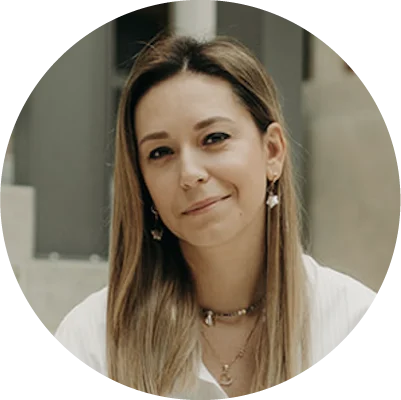
This workshop explores how learning scripts shape the ways individuals engage with knowledge, growth, and relational dynamics in both psychotherapy and educational settings. We will examine how script messages influence learning behaviours, from curiosity and risk-taking to avoidance and perfectionism. Through interactive exercises and guided reflection, participants will identify their own internalised learning patterns and consider how these may support or hinder mature autonomy. The workshop integrates core TA concepts with contemporary ideas about inclusivity culture. Participants will leave with practical strategies to foster environments that encourage unlearning, authenticity, and flourishing for themselves and those they support.
Alina Comendant - PTSTA-P, CTA-P, CTA-E

The workshop is an invitation to reflect deeply on how the therapist's inner authenticity—their conscious access to their own “secret garden”—becomes a source of relational safety in the office. Participants will explore how the unconscious aspects of the therapist's self influence their ability to create a space in which the client's autonomy can mature. The practical and experiential elements of the workshop will enable a deeper understanding of the subtle dynamics between care and control, empathy and projection. The aim of the meeting is to deepen relational awareness and develop the ability to create a safe and authentic space in which real change and growth in client autonomy can take place.
Adam Bekier - PTSTA-P

Inclusion is often understood as openness and acceptance of diversity — yet real inclusion arises in the here and now, in how we meet each other across difference. This experiential workshop explores how awareness and boundaries can coexist as essential elements of mature autonomy. Using concepts from Transactional Analysis — ego states, group imago, symbiosis, and autonomy — we will look at how inclusion unfolds moment by moment in groups and professional relationships. And we will reflect on subtle processes of belonging and exclusion, and learn to navigate them with awareness and respect. The session offers a balance of theoretical framing and practical exploration, aiming to support consultants, coaches, and leaders in fostering both connection and differentiation — the foundation for authentic inclusivity and sustainable human systems.
Jeanette Wygoda-Klute (PTSTA-O) is a TA-Practinioner, Coach and Organisational Developer from Germany. Her work bridges ethical consulting, inclusion and autonomy in professional relationships.
15:30 – 15:45
COMFORT BREAK
15:45 – 16:45
THE FOURTH LINE OF THE WORKSHOPS



16:45 – 17:00
COMFORT BREAK
17:00 – 18:30
THE FIFTH LINE OF THE WORKSHOPS

This presentation explores how a culture of inclusion nurtures mature autonomy, ethical awareness, and social responsibility within Transactional Analysis practice and education. Inclusion is understood not as tolerance but as a relational and ethical stance that honors diversity and mutual recognition. By integrating the principles of OKness, respect, and shared responsibility, we reframe autonomy as interdependent growth rather than individual independence. Through reflective dialogue and experiential learning, participants will examine how inclusive practices in TA training and psychotherapy can transform relationships, communities, and professional culture toward conscious, ethical, and socially responsible autonomy.
Alva Ramírez-Villatoro - PhD in Psychology, MEd & PTSTA-P

This workshop explores how educational script is developed and examines the essential role inclusion in development script. Together, we will look at the key elements that shape a educational script, discuss how inclusive principles influence it, and consider how diverse learner needs transform our work with educational script. Participants will gain practical insights into creating learning experiences that are accessible, meaningful, and responsive to all students.
Jan Honza Šimek - PTSTA (E)
As a former teacher of mathematics, physics, and computer science, I now work as a trainer in transactional analysis, focusing on supervision and the professional development of teachers at primary, secondary, and university levels. I also support school counseling teams in creating healthy and effective learning environments. My passion lies in helping schools become places where children learn with joy and enthusiasm, feel safe, and are empowered to take full responsibility for their own learning.
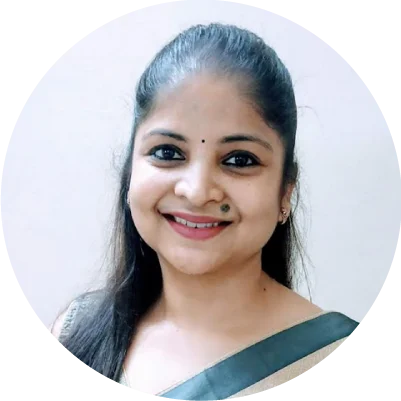
This workshop examines how systemic discounting and unconscious Organizational Scripts create exclusionary succession processes. Leveraging Transactional Analysis (TA), we will analyze how leadership's Ego States and predictable Games maintain bias in talent selection and development. Participants will learn to use the OK Corral to diagnose culture and apply Adult-to-Adult protocols to mitigate bias in reviews.
Priyanka Lenka - CTA-Organizations
18:30 – 19:00
COMFORT BREAK
19:00 – 20:30
SPECIAL GUEST

Mastery in the Emotional World (EW) is necessary if we are to create and maintain intimacy with the people we love and who love us. In the process of resolving the Attachment Injunctive Messages we gain skills that can serve us in the larger world with all people, not just those closest to us. In this workshop we will review the Three Worlds in all relationships that were created by choice and genuine aQection. The Three Worlds are: Survival, Emotional and Practical. It is essential to recognize which world is present in real time and to respond knowing the discreet behaviors required for each. Compassion and empathy are key to satisfying the EW and are portable skills, creating the opportunity for Acceptance of for all people, especially those who appear foreign to us.
John McNeel - M.Div., Ph.D., Certified Teaching Member ITAA
CLOSING OF THE FIRST DAY OF THE CONFERENCE
09:00
Registration of the participants
(connecting to the conference)
09:30 – 10:00
the conference opening
10:00 – 11:30
THE FIRST LINE OF THE WORKSHOPS
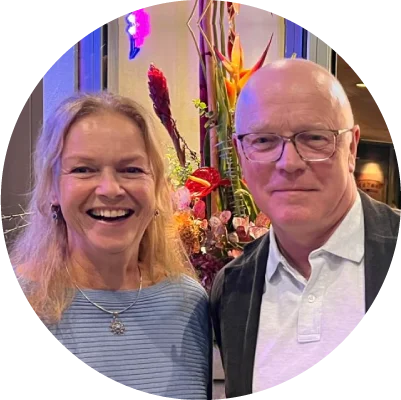
Autonomy as a concept for self-direction or self-regulation is an illusion. You can only be truly autonomous when you are part of a larger whole and your actions are in alignment with that whole. Even a hermit living far from civilization depends on a larger system for survival. Your journey over the steppingstones to autonomy involves attunement and connection with others. In this workshop, we will first clarify a few relevant concepts, after which we will work in subgroups through a series of experiential exercises.
Harry Gerth - MSc/TSTA(O)
Marina Hoos - PTSTA(E)
11:30 – 11:45
COMFORT BREAK
11:45 – 12:45
THE SECOND LINE OF THE WORKSHOPS


12:45 – 13:30
LUNCH BREAK
13:30 – 15:00
THE THIRD LINE OF THE WORKSHOPS
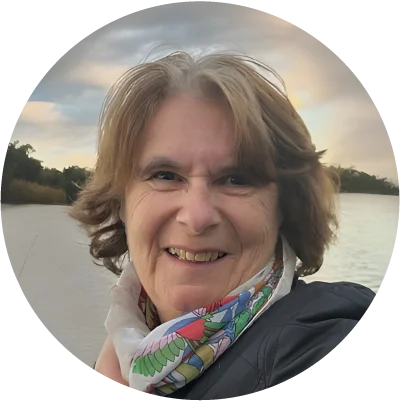
This interactive session explores how inclusivity and autonomy, viewed through a Transactional Analysis lens, are interdependent forces in individual and systemic development.
Dr. Sylvia Schachner - educational manager, Psychologist, systemic school developer, TSTA-E, EATA president
15:00 – 15:15
COMFORT BREAK
15:15 – 16:15
THE FOURTH LINE OF THE WORKSHOPS


16:15 – 17:00
CLOSING THE CONFERENCE
Голова Оргкомітету
Членкиня УСТА

Президент УСТА
Членкиня УСТА
Членкиня УСТА

Членкиня УСТА
Членкиня УСТА